Measure the outside. All three sides.
Measure external length, width and height after packing is complete. Include protruding parts and record actual weight from a suitable scale.
Open calculator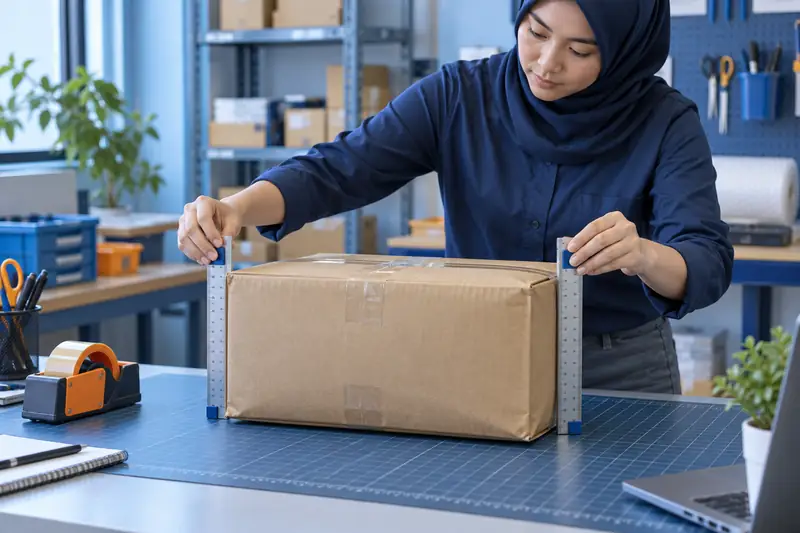
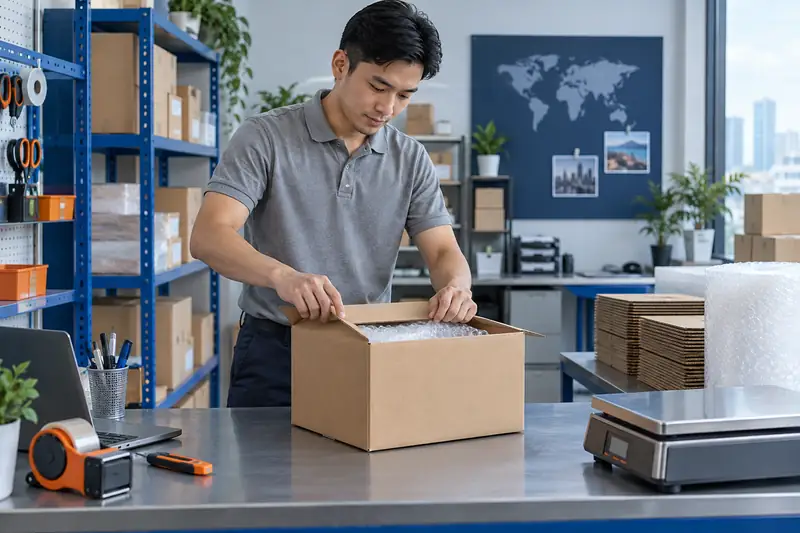
Close the final package
Measure after the goods, cushioning, tape and outer protection are in place. An open carton or an unpacked item does not represent the finished parcel’s footprint. Measure again if the packaging changes.
Do not compress a bulging side to get a smaller number. For an irregular shape, confirm the measurement method with the selected service.
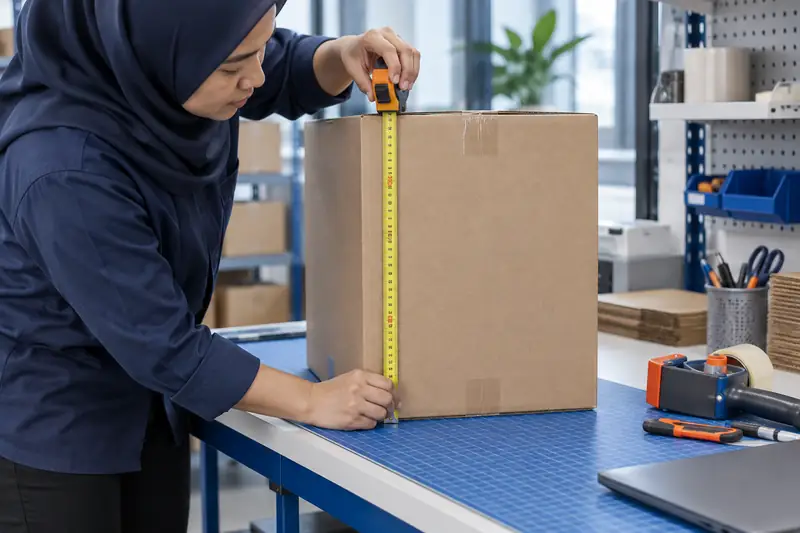
Find the furthest outer points
Take length, width and height along perpendicular axes. Keep the tape straight and use cm. Include protrusions instead of using internal dimensions or the nominal size printed on an empty carton.
Record the original reading first. If the carrier requires dimension rounding, select that rule explicitly; avoid rounding twice.
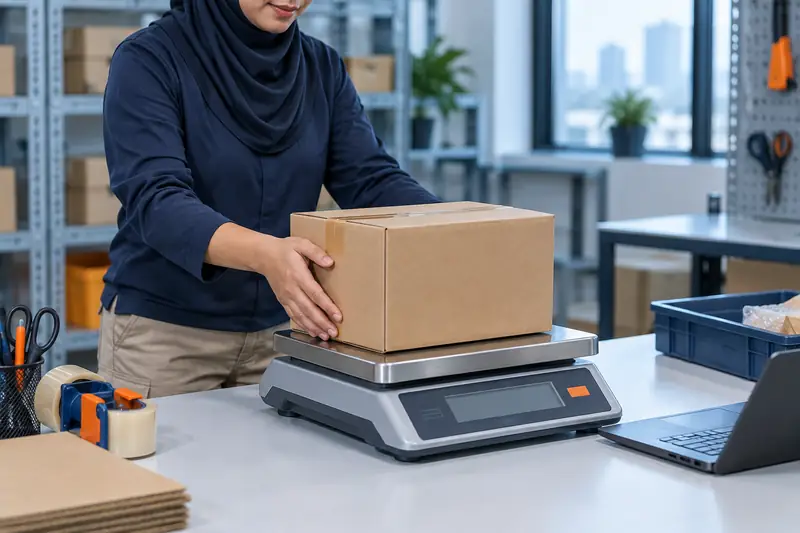
Record the scale reading
Weigh the complete parcel on a suitable, stable scale. Ensure that a container or support that will not travel is excluded from the reading. Actual weight is needed to determine the higher value.
Group only parcels with the same dimensions and actual weight. Do not assume that equal-sized cartons have equal actual weights.
An assumption still unclear?
Start with a question about measurement, divisors or rounding. Confirm the actual service policy before making a shipping decision.
Ask on WhatsAppReferences & scope
Official references reviewed on 4 October 2026. Policies vary by service. Examples and images are illustrative; scale markings in images are not inputs for the worked examples.